Velcro: Inspired by Burrs
A dog walk that became a fastener. Swiss engineer George de Mestral invented hook-and-loop fastening after burrs stuck to his dog in 1941. How Velcro works and where it went.
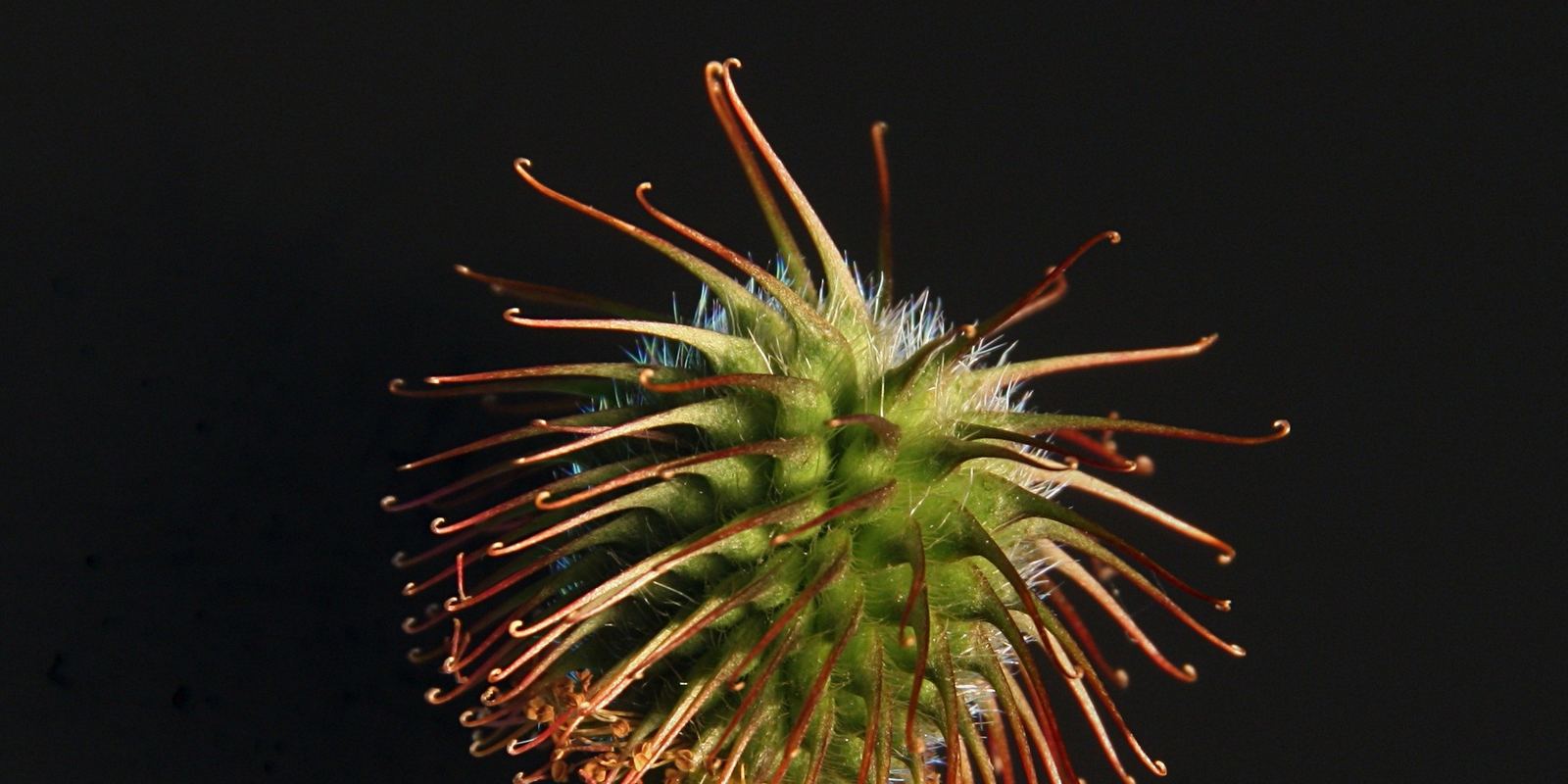
A burr's tiny hooks: Zephyris, CC BY-SA 3.0
Nature's idea
In 1941, after a walk in the Swiss Alps, engineer George de Mestral noticed burdock burrs clinging to his clothes and his dog's fur. Under a microscope he saw that each burr was covered in tiny hooks that caught loops of fabric and hair. He wondered if the same idea could make a fastener.
Years of experiments
Making the hooks and loops reliably took years. Cotton wore out quickly, so de Mestral turned to nylon, which could be woven into loops and, when heat-treated and cut, formed tough hooks. He patented his invention in the 1950s and named it Velcro, combining the French words velours, meaning velvet, and crochet, meaning hook.
Taking off
Velcro was at first seen as ugly for fashion, but it found uses where convenience mattered: sports gear, children's shoes, medical braces and equipment. Astronauts used hook-and-loop fasteners to keep items from floating around in spacecraft, which helped the product's futuristic image.
Biomimicry
Velcro is one of the best-known examples of biomimicry, designing by copying nature. Engineers have since copied gecko feet for sticky grippers, kingfisher beaks for high-speed train noses and lotus leaves for self-cleaning surfaces.
How it changed everyday life
Hook-and-loop fasteners made things easier for people who find laces and buttons hard, including young children, older people and anyone with limited hand movement. Hospitals use them on blood pressure cuffs, braces and splints. Sports and outdoor gear rely on them for adjustable straps, and in the 1980s sneakers with hook-and-loop straps instead of laces became a look many OGs remember well. The ripping sound has even been used as a sound effect in films and TV.
Did you know?
Velcro is a trademark, and the company has even made funny videos asking people to say hook and loop instead of velcro to protect its brand name, a problem known as genericide.
- A burr's tiny hooks: Zephyris, CC BY-SA 3.0
Text written by Original General.