Chuck Taylor All Stars
The canvas sneaker that never retired. Born as a 1917 basketball shoe and named for a traveling salesman, the Converse All Star went from Olympic courts to everyday street style.
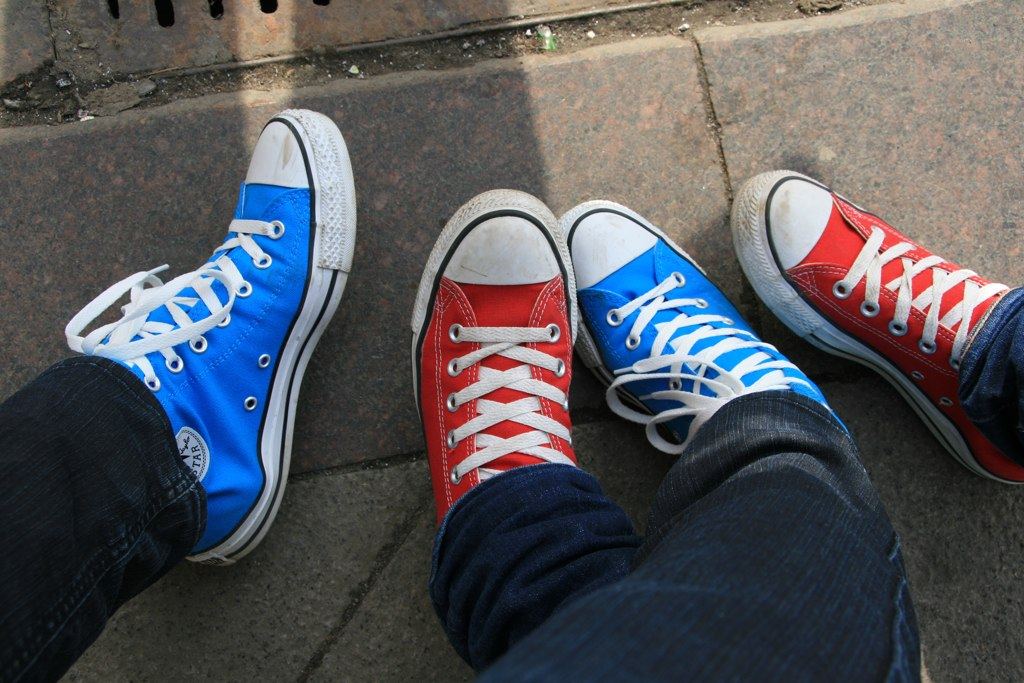
Red and blue high-top All Stars on the pavement: Mikko Lautamäki, CC BY 2.0
A rubber company takes the court
Marquis Mills Converse opened the Converse Rubber Shoe Company in Malden, Massachusetts, in 1908. In 1917 the company introduced a canvas basketball shoe with a rubber sole and a high top to support the ankle. It became the All Star, and more than a century later the basic shape is almost unchanged: canvas upper, white rubber toe cap, flat grippy sole.
Basketball was still a young sport, and a shoe made for it was a smart bet. The company just needed someone to get it into gyms.
The salesman who became a name
That someone was Chuck Taylor, a semi-pro player from Indiana who joined Converse as a salesman in 1921. He traveled from town to town running basketball clinics, starting with one at North Carolina State in 1922, teaching the game and talking up the shoe. He also helped create the Converse Basketball Yearbook.
His signature was eventually added to the ankle patch, and the shoes became Chuck Taylor All Stars, often called the first celebrity-endorsed athletic shoe. Taylor was inducted into the Naismith Basketball Hall of Fame in 1969, the year he died.
From Olympic courts to the bleachers
All Stars were the official shoe of the US Olympic basketball team from 1936 to 1968, and for decades they ruled college and pro courts. By the 1960s Converse held an estimated 70 to 80 percent of the basketball shoe market. Leather and new sneaker technology took over the game in the 1970s, and canvas Chucks slowly disappeared from the NBA. Center Tree Rollins is believed to have been the last NBA player to wear them regularly, in the 1979 to 1980 season.
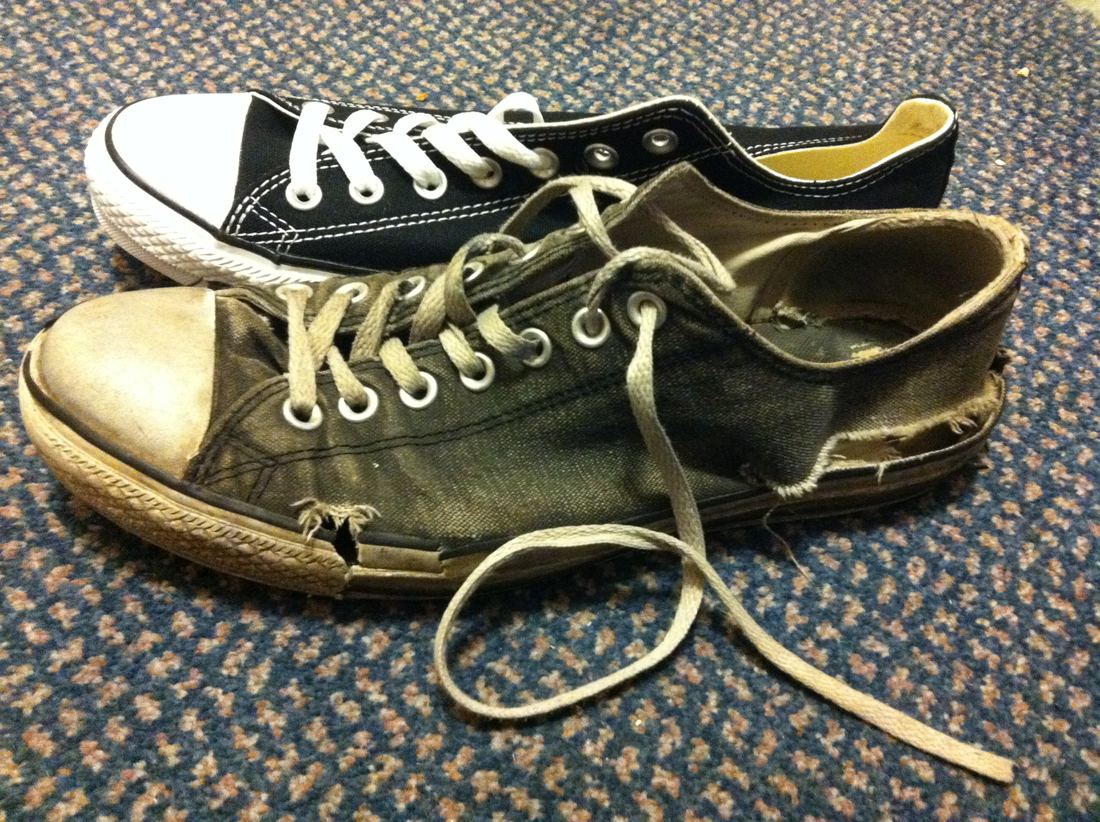
Off the court, though, they only got bigger. Punk and rock bands wore them on stage, skaters wore them for board feel, and students wore them to pieces and bought another pair. Part of the charm is how they age: scuffed toes and faded canvas are a badge, not a flaw.
Still Chucks after all these years
Nike bought Converse in 2003 for about 305 million dollars, and the All Star kept rolling. Today you will find high tops and low tops in dozens of colors, plus premium takes like the Chuck 70 that lean into vintage details.
The simple formula is why it works. A pair of Chucks goes with jeans, shorts or a suit, it looks right on a kid or a grandparent, and it carries more than a hundred years of style history in a shoe you can still buy for everyday money. That is about as OG as footwear gets.
- Red and blue high-top All Stars on the pavement: Mikko Lautamäki, CC BY 2.0
- Brand new versus worn to the bone: Michael James Shaw, CC BY-SA 4.0
Text written by Original General.
← The Muscle Car EraRoller Disco: Skates, Lights and Good Times →