Low and Slow: The Lowrider Story
Chicano car culture that rewrote the street. From 1940s Southern California to Espanola, New Mexico, how Chicano car builders turned low, slow cruising and hydraulics into rolling art.
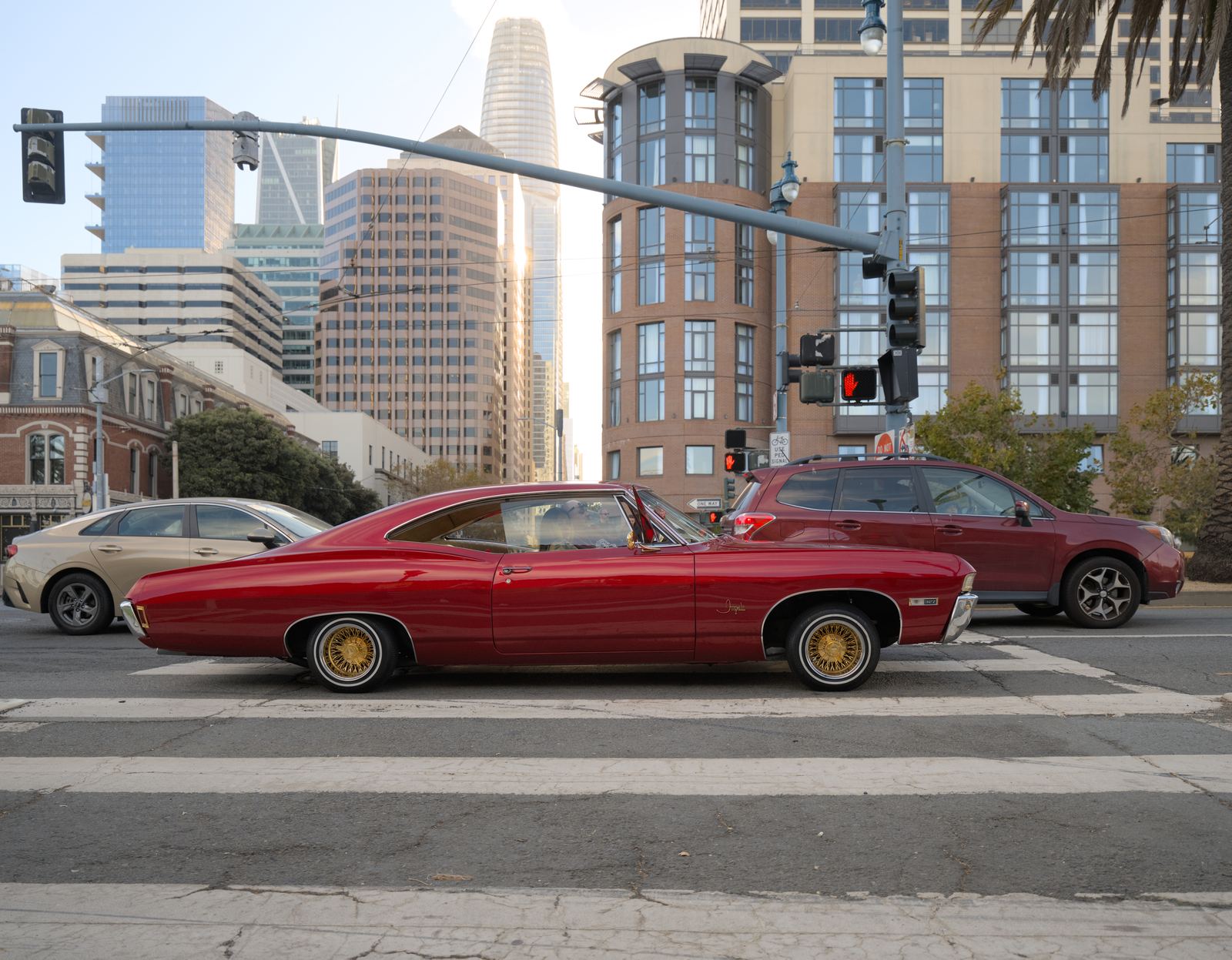
A Chevy Impala lowrider on San Francisco's Embarcadero: Dllu, CC BY-SA 4.0
Built to cruise, not to race
While hot rodders were chasing speed after the 1940s, young Mexican American builders in Southern California went the other way. They dropped their cars as close to the pavement as they could, added deep paint and chrome, and drove them slowly down the boulevard so everyone had time to look. The motto said it all: low and slow.
That choice was the point. A lowrider is a statement of pride and patience, a car built to be seen at walking pace on a Sunday cruise with the windows down and the family in the back seat.
The switch that changed everything
Starting January 1, 1958, California law made it illegal to drive a car with any part of its body lower than the bottom of its wheel rims. Builders who had lowered their cars with cut springs or sandbags in the trunk suddenly risked a ticket every time they rolled out.
In 1959 a young customizer named Ron Aguirre found the fix. He fitted his car with hydraulic pumps and valves originally made for aircraft, so he could raise it to a legal height for the road and drop it back down when he parked. One flip of a switch, and the lowrider could dance. Hydraulics soon spread across the scene, and in time hopping contests, where cars bounce their front wheels high off the ground, became a sport of their own.
Impalas, clubs and a car called Gypsy Rose
The Chevrolet Impala, which arrived in 1958 with an X-shaped frame that took well to lowering, became the favorite canvas. Car clubs gave the culture its backbone. Jesse Valadez founded the Imperials car club in East Los Angeles in 1964 with his brother Armando, and his 1964 Impala, Gypsy Rose, covered in hand-painted roses, became the most famous lowrider of all.
Gypsy Rose rolled through the opening sequence of the 1970s TV comedy Chico and the Man, and it later became the first lowrider ever inducted into the Historic Vehicle Association's register. The car has been shown at the Petersen Automotive Museum in Los Angeles.
From San Jose to Espanola
In 1977 a group of San Jose State students launched Lowrider magazine, giving builders a national stage for their paint jobs, engraving, murals and upholstery. Lowrider bicycles took the same style onto two wheels, with long forks, banana seats and plenty of chrome.
Today the culture stretches from Los Angeles and San Jose to Texas, Japan and beyond. Espanola, New Mexico, proudly bills itself as the lowrider capital of the world, where families pass cars and craftsmanship down from one generation to the next. Catch a cruise night anywhere and the rules are the same as they always were: take it slow, keep it clean, and let the car do the talking.
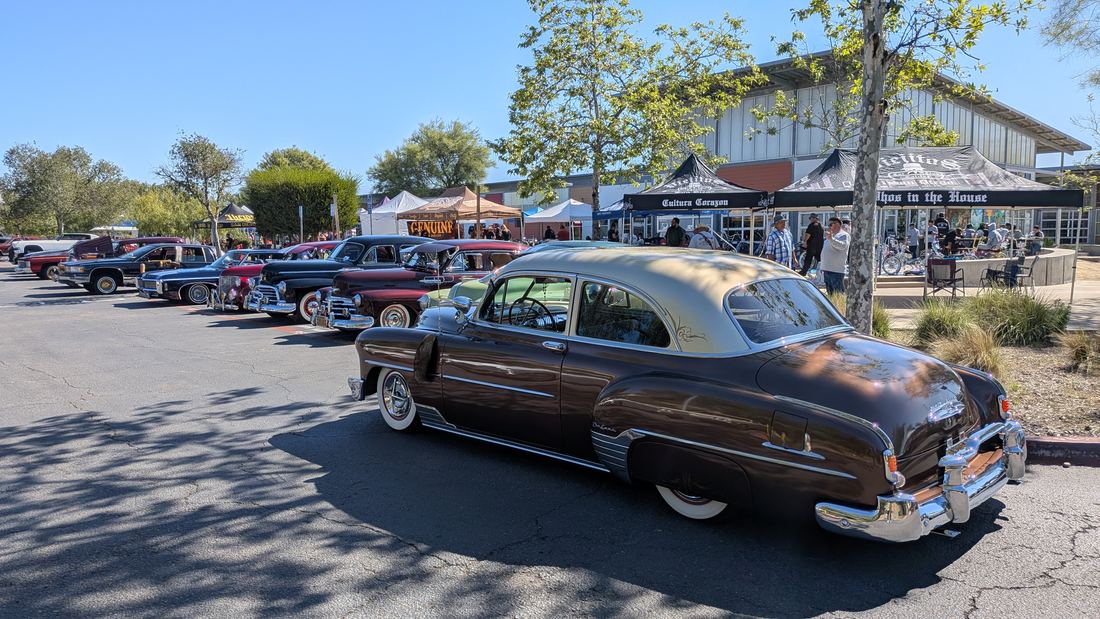
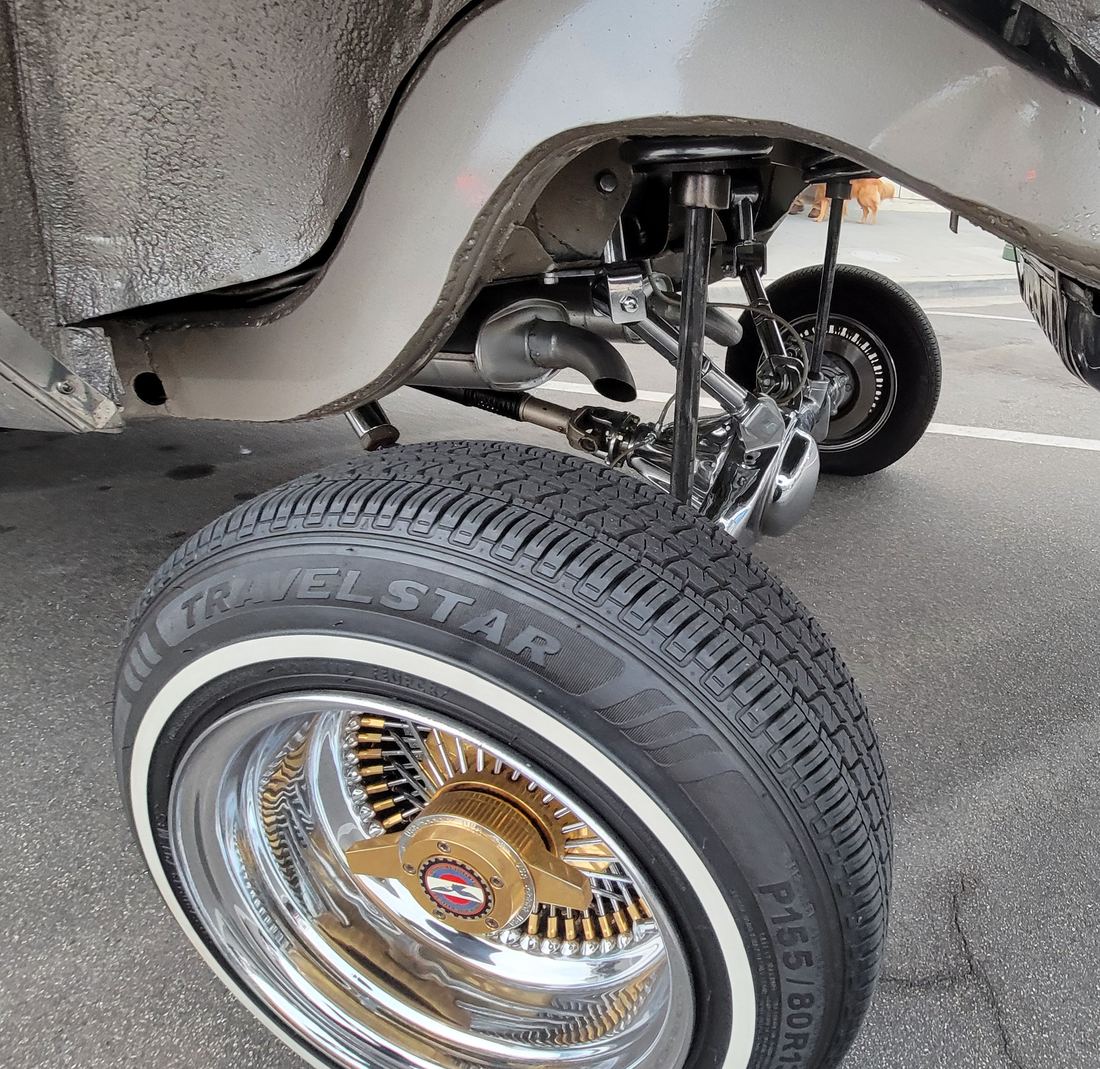
- A Chevy Impala lowrider on San Francisco's Embarcadero: Dllu, CC BY-SA 4.0
- Lowrider car show in Chula Vista, California: Ahsoka Dillard, CC0
- The lifting setup behind a lowrider's front wheel: Votpuske, CC BY 4.0
Text written by Original General.