
The Rubik's Cube
The puzzle that took over the 1980s. A Hungarian architecture teacher built a twisting cube in 1974. It became the bestselling puzzle ever, and speedcubers now solve it in under 3 seconds.
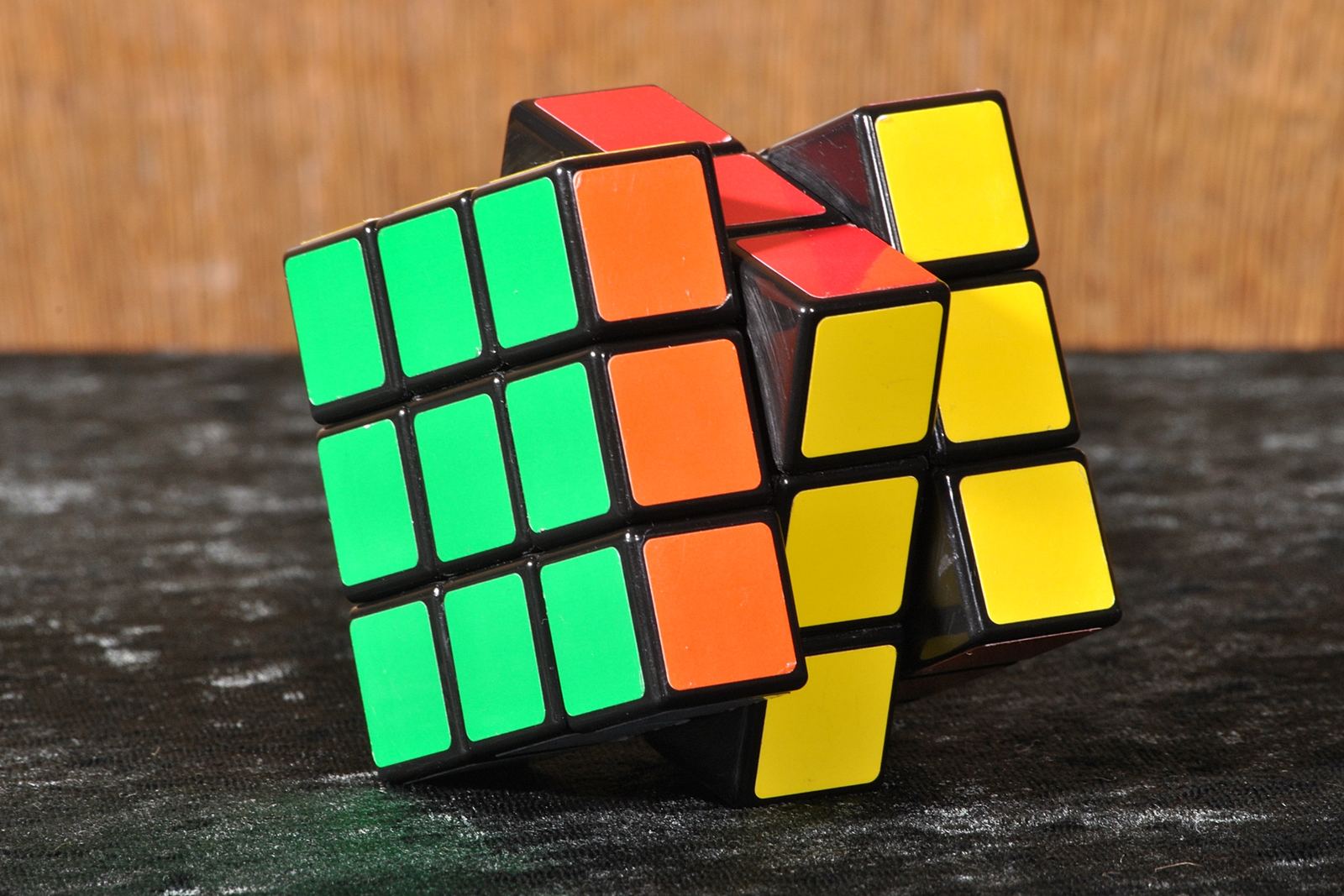
A 3x3 cube mid-twist: kaʁstn Disk/Cat, CC BY-SA 3.0
A teaching tool that escaped the classroom
Erno Rubik was a Hungarian sculptor and architecture professor in Budapest when he built his first cube in 1974. He was fascinated by how objects move in space, and he wanted a model that could twist in every direction without falling apart. Once he scrambled it, he realized that getting it back was a serious challenge.
He called it the Magic Cube and filed for a Hungarian patent in January 1975. The first batches reached Budapest toy shops in late 1977.
Cube fever
In 1980 Ideal Toy Corp licensed the puzzle, renamed it after its inventor, and launched it worldwide with showings at toy fairs in London, Paris, Nuremberg and New York. That year it also won a special award from Germany's Game of the Year jury. It took off like nothing before it. Between 1980 and 1983, around 200 million cubes were sold, and solution books climbed the bestseller lists.
The first World Rubik's Cube Championship was held in Budapest on June 5, 1982, and Minh Thai won it with a solve of 22.95 seconds. As of 2024 about 500 million cubes had been sold, making it the bestselling puzzle in history.
The math inside
A standard 3x3 cube has 43,252,003,274,489,856,000 possible arrangements, roughly 43 quintillion. That sounds hopeless, yet in 2010 researchers proved that every single one can be solved in 20 moves or fewer. Puzzle fans call that number God's number. Part of the trick is that the cube is simpler than it looks: the six center squares never move relative to each other, so every solve is really about putting 8 corner pieces and 12 edge pieces back where they belong.
Most people learn a layer-by-layer method that takes far more than 20 moves, but it works every time, which is why a patient beginner can still crack the cube in an afternoon.
From 22 seconds to under 3
Speedcubing is now a global sport run by the World Cube Association, with competitions almost every weekend. Modern speed cubes turn smoothly with magnets inside, and top solvers memorize hundreds of move sequences.
The results are wild. As of October 2026, the official world record for a single 3x3 solve is 2.76 seconds, set by Teodor Zajder of Poland in February 2026, and the record average of five solves is 3.51 seconds by Yiheng Wang of China. Minh Thai's winning time from 1982 would now be a slow warm-up, but the cube itself still has the same six colors that puzzled the whole world more than four decades ago.
- A 3x3 cube mid-twist: kaʁstn Disk/Cat, CC BY-SA 3.0
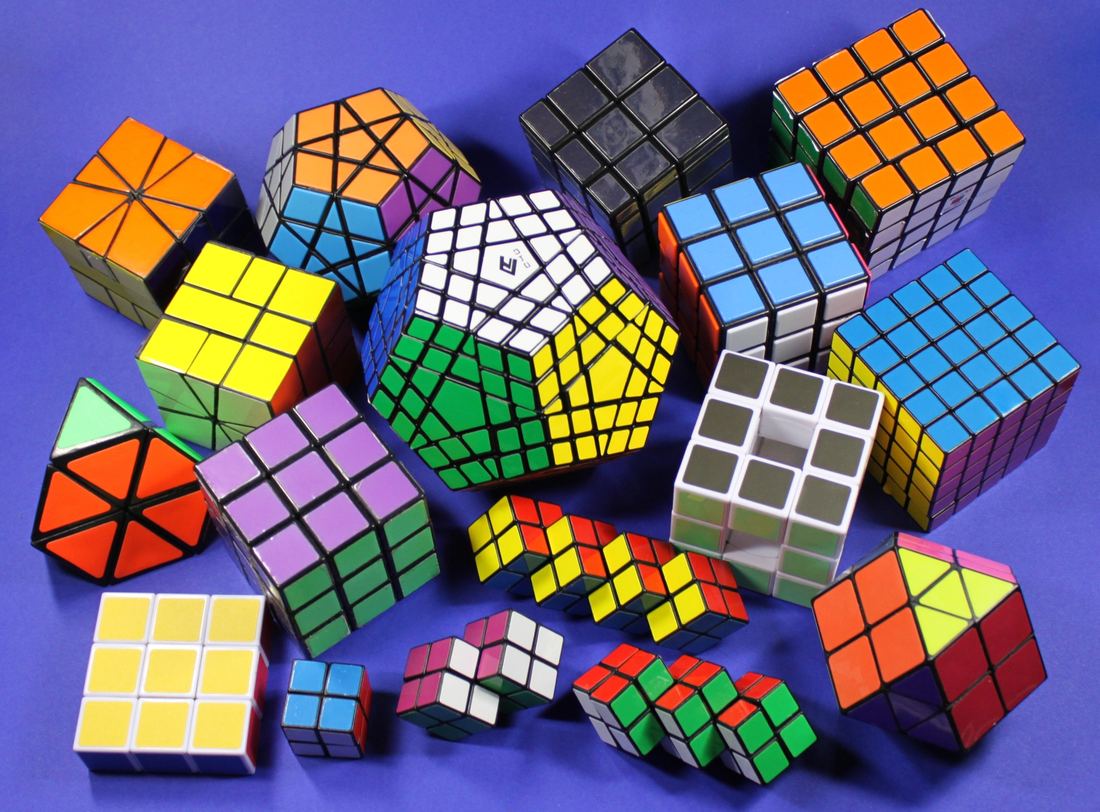
- A collection of cubes and twisty puzzles: Gerwin Sturm from Vienna, Austria, CC BY-SA 2.0
Text written by Original General.


.jpg)