The Barcode
From sand drawings to the checkout. The barcode began as a bullseye sketched in sand in the 1940s. How the UPC was created and why the first scanned item was a pack of gum in 1974.
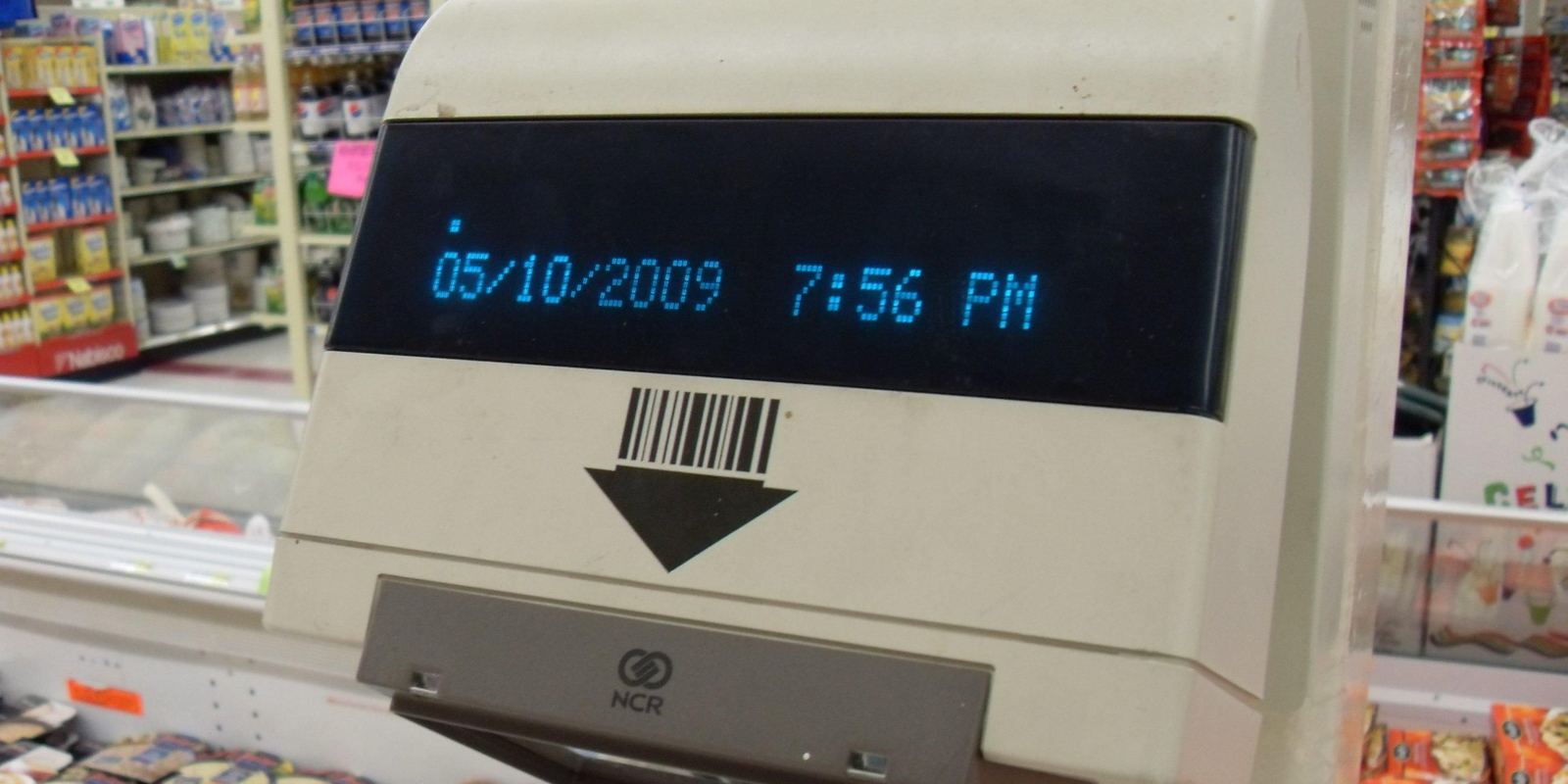
A checkout barcode scanner: Luke, Public domain
An idea in the sand
In the late 1940s, Bernard Silver, a graduate student in Philadelphia, overheard a grocery executive asking for a way to capture product data at checkout. His friend Norman Joseph Woodland thought about the problem on a Florida beach and, inspired by Morse code, drew dots and dashes in the sand, then stretched them into lines. They patented a bullseye-shaped code in 1952.
Waiting for technology
Reading the code required lasers and computers that were not yet practical or affordable. Through the 1960s, railways and grocers experimented with automatic identification. In 1973 the US grocery industry chose the Universal Product Code, a rectangular barcode designed at IBM by George Laurer, building on Woodland's work.
The first scan
On June 26, 1974, at a Marsh supermarket in Troy, Ohio, a cashier scanned a 10-pack of Wrigley's Juicy Fruit gum, the first UPC scan in a store. That pack of gum is now in the Smithsonian's collections.
Barcodes everywhere
Barcodes changed retail by speeding up checkouts, reducing errors and making inventory tracking possible. Today the standards organisation GS1 manages product codes worldwide, and square QR codes, invented in Japan in 1994, carry far more data.
How it changed everyday life
Barcodes changed shopping in ways most people never notice. Checkouts became faster, prices could be changed in a central system instead of with sticker guns, and shops could track exactly what sold and when, which shaped modern supply chains. Barcodes now appear on boarding passes, parcels, library books, hospital wristbands and concert tickets. Self-checkout machines and phone scanning apps are direct descendants of that first pack of gum in Ohio.
Did you know?
The numbers under a barcode are printed so people can type them if scanning fails, and the last digit is a check digit that catches mistakes.
- A checkout barcode scanner: Luke, Public domain
Text written by Original General.