
The Golden Age of Arcades
Quarters, cabinets and the birth of gaming. From Pong in a California bar to Space Invaders and Pac-Man, here is how the arcade boom of the late 70s and early 80s turned quarters into a culture.
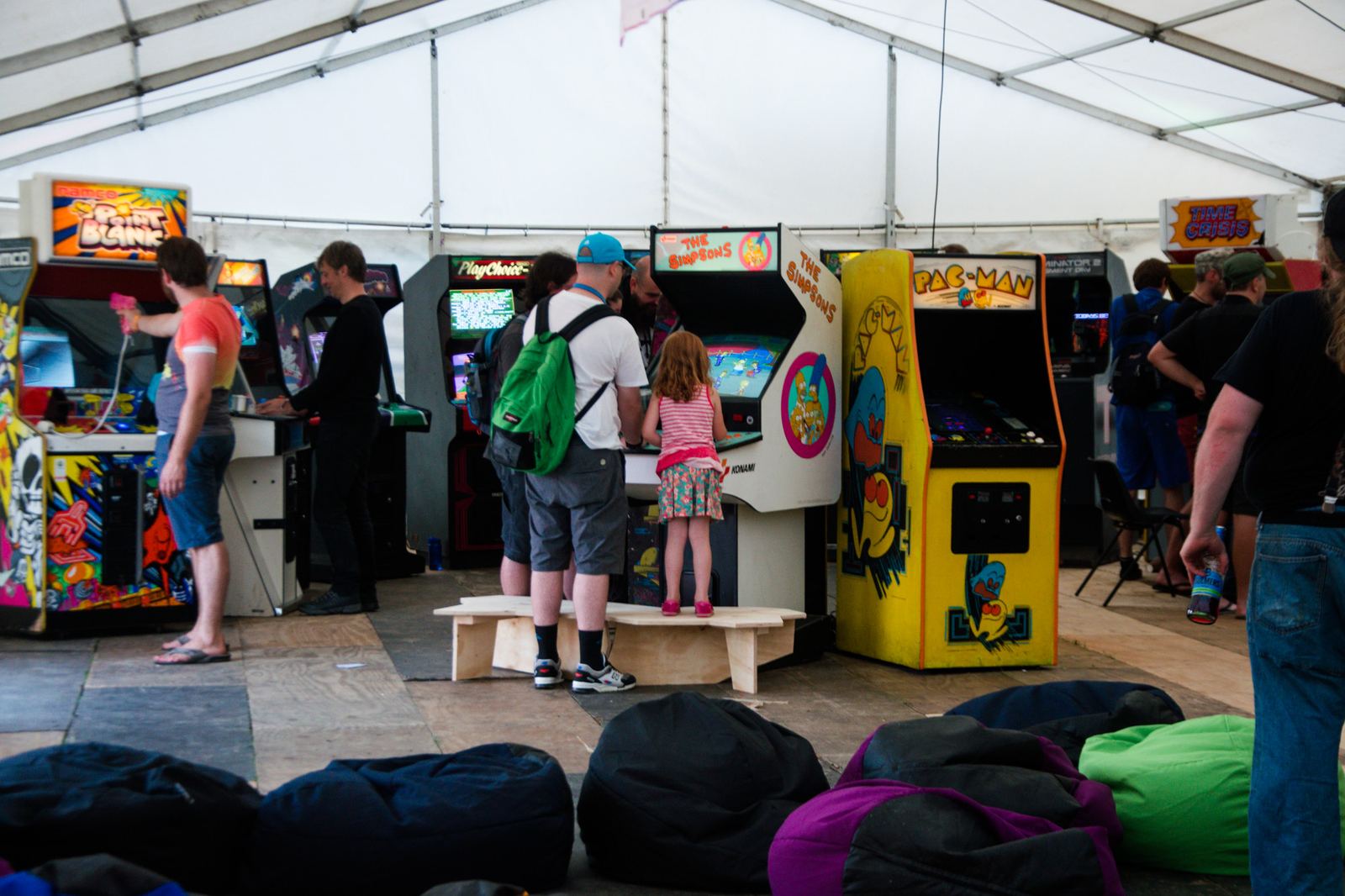
A pop-up retro arcade, 2016: Mitch Altman from San Francisco, USA, CC BY-SA 2.0
A ping, a pong and a packed bar
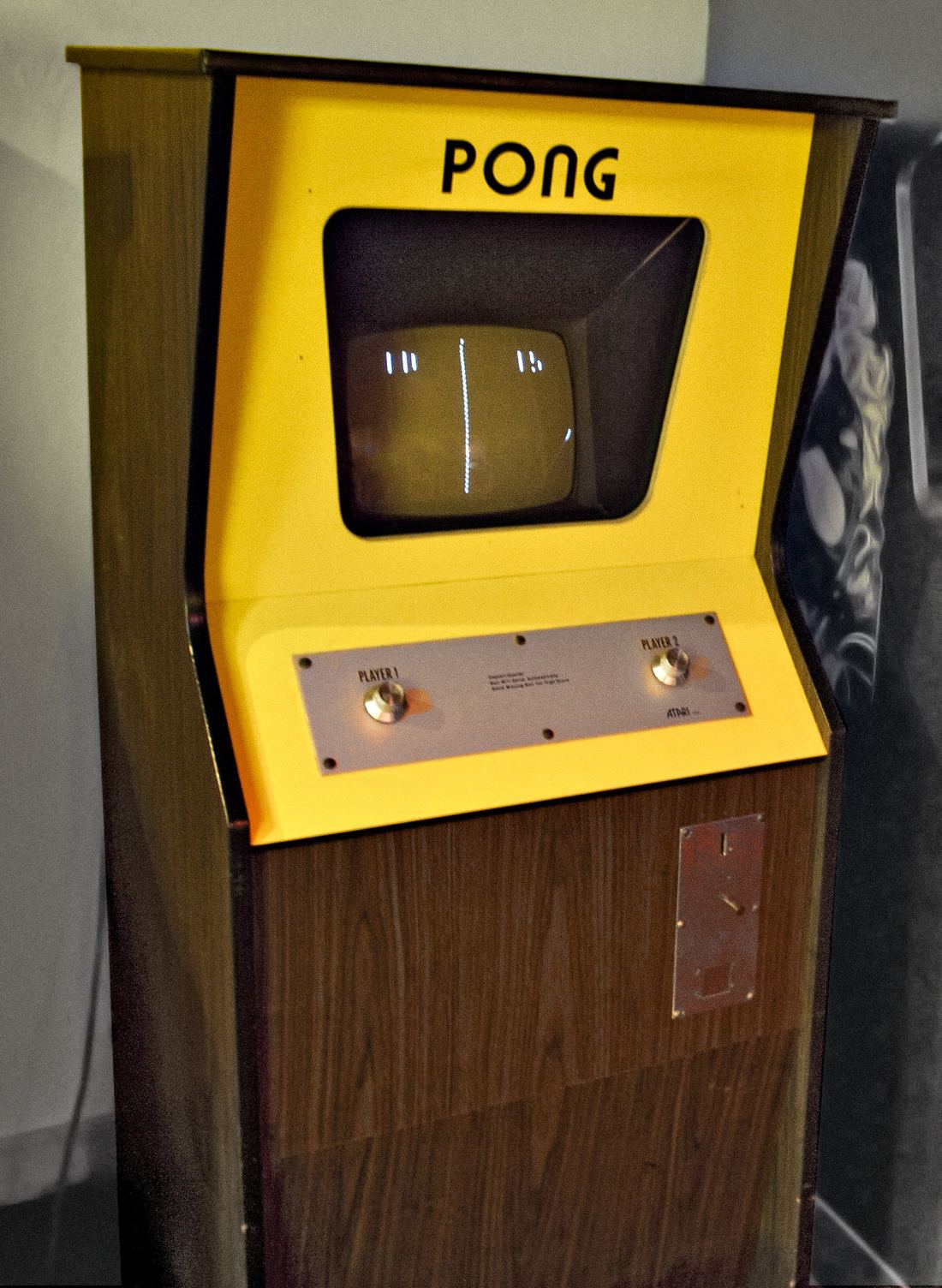
In August 1972, Atari's Nolan Bushnell and engineer Allan Alcorn set up a prototype in Andy Capp's Tavern, a bar in Sunnyvale, California. The game was simple: two paddles, a square ball and a score at the top of the screen. Alcorn had built it as a training exercise, and it turned out far better than anyone planned. Regulars started showing up just to play.
Atari announced Pong on November 29, 1972, and it became the first commercially successful video game. By the end of 1974 the company had sold more than 8,000 cabinets, and rivals were cloning the idea within months. The coin-op video game had arrived, and bars, bowling alleys and pizza joints made room for a glowing box in the corner.
The invaders land
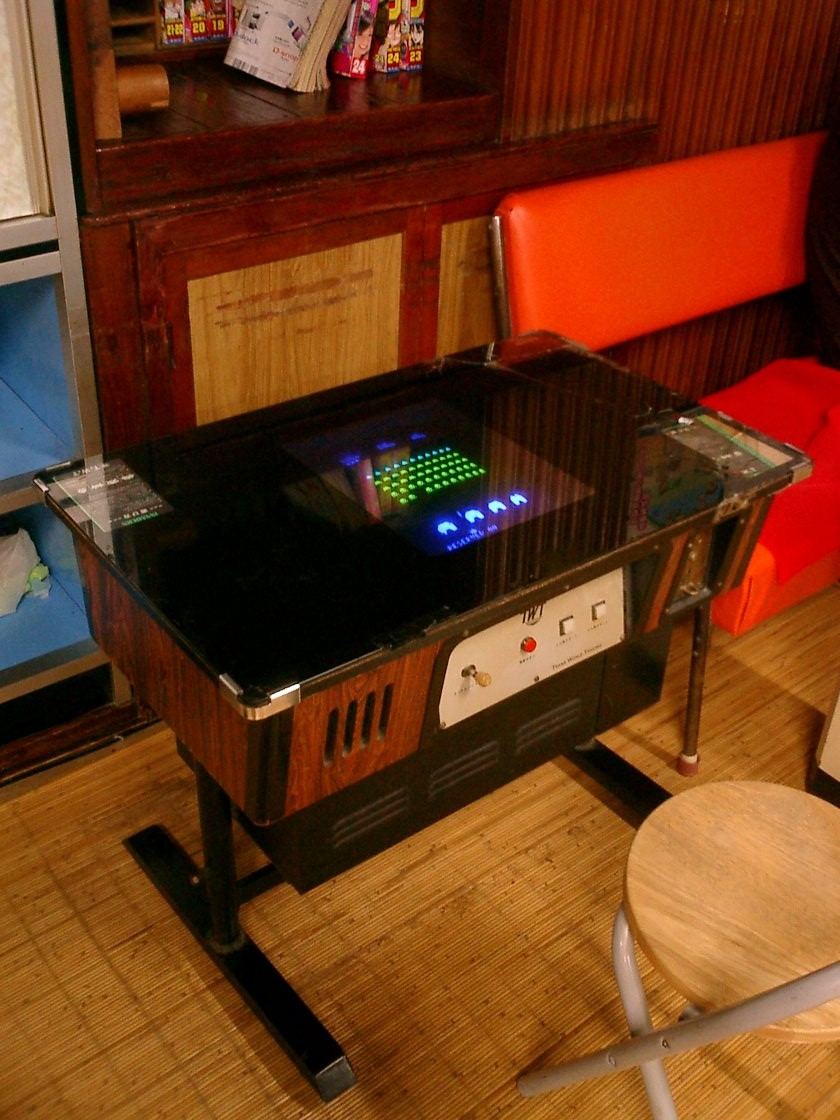
Japan delivered the next shock. Taito unveiled Space Invaders to the trade in June 1978, a game designed almost single-handedly by Tomohiro Nishikado, who also built much of the hardware. Rows of pixel aliens march side to side and inch downward while you slide a cannon along the bottom of the screen.
Its most famous feature was a happy accident. The hardware could draw the aliens faster when fewer were left, so the last few speed up and the thumping soundtrack races with them. That rising tension hooked players everywhere, and many historians count Space Invaders as the start of the arcade golden age.
Waka waka worldwide
On May 22, 1980, Namco began location testing Puck Man in Shibuya, Tokyo. Designer Toru Iwatani wanted a game that would appeal to women as well as men, with cute, colorful characters, so he built a maze, filled it with dots and added four colorful ghosts: Blinky, Pinky, Inky and Clyde. The yellow hero was famously inspired by a pizza with a slice missing, plus a rounded take on the Japanese character for mouth.
Midway brought the game to North America in October 1980 as Pac-Man, and it exploded. Guinness World Records later named it the most successful coin-operated arcade game, with 293,822 machines installed worldwide.
Quarters on the glass
By 1982 Americans were feeding an estimated $8 billion a year into arcade machines, more than pop music and Hollywood box office earned combined that year. Lining a quarter up on the cabinet glass to call next game became an unwritten rule of the arcade, along with signing your three initials into the high score table.
The boom cooled after 1983 as copycat games flooded arcades and home consoles got better. But the golden age left a permanent mark: the joystick, the high score chase and the idea that a game could be a hangout. Every OG who ever ran out of quarters knows exactly what the sound of a coin dropping meant.
- A pop-up retro arcade, 2016: Mitch Altman from San Francisco, USA, CC BY-SA 2.0
- An original Pong cabinet: Rob Boudon (derivative work: Ubcule), CC BY 2.0
- A Space Invaders table cabinet: Tomomarusan, CC BY 2.5
Text written by Original General.
← Roller Disco: Skates, Lights and Good TimesThe NES: The Console That Saved Gaming →
.jpg)

